For many people, the Camino de Santiago begins somewhere in northern Spain. The familiar images are of scallop shells, stone villages, mountain passes and pilgrims arriving in Santiago de Compostela after weeks on the road.
But the story of the Camino does not necessarily begin in Spain.
In the south of England, a historic pilgrimage route connects Reading with Southampton, following the path that medieval pilgrims may once have taken before boarding ships for the continent and continuing their journey towards the shrine of St James.
Known as St James' Way, this approximately 68-mile route offers an opportunity to experience a little of the Camino spirit without travelling abroad. It is a particularly appealing option for anyone considering a longer pilgrimage in Spain but wanting to try a multi-day walking journey closer to home first.
From Reading Abbey to the south coast
The journey begins in Reading, where the remains of Reading Abbey provide an important connection with the medieval devotion to St James.
Founded by Henry I in the twelfth century, the abbey became an important religious centre and was closely associated with the cult of St James. Its connection with the saint makes it a fitting starting point for a route bearing his name.
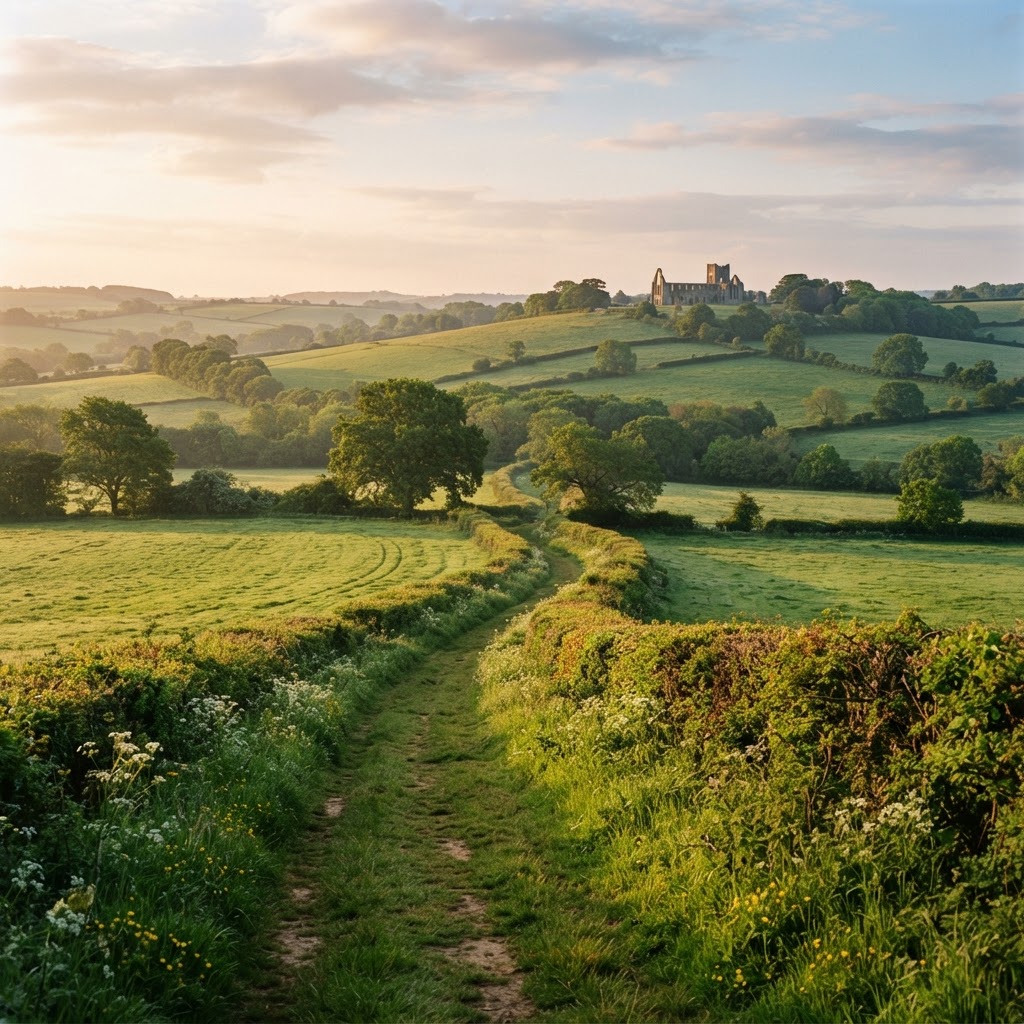
From Reading, the trail heads through the Berkshire and Hampshire countryside, following a combination of historic paths, riverside stretches and quiet rural lanes.
One of the more interesting features of St James' Way is its relationship with the Roman road network. The route passes the remains of Silchester, once the Roman town of Calleva Atrebatum, before continuing towards Basingstoke and Winchester.
Silchester is well worth taking time to explore. Its surviving Roman walls and archaeological remains offer a fascinating glimpse into the history of southern Britain, adding another layer to a journey that already connects several different periods of English history.
Along the way, walkers encounter village churches dedicated to St James, historic settlements and quiet stretches of countryside that are easy to overlook when travelling by car.
Winchester: an important stop on the journey
Winchester is arguably the most significant historic destination along the route.
Once the capital of the Anglo-Saxon kingdom of Wessex, the city has a remarkable religious heritage. Winchester Cathedral dominates the historic centre and is one of the great medieval buildings of England.
It is also worth visiting the Hospital of St Cross, a medieval charitable institution that continues to welcome visitors. Its association with the ancient Wayfarer's Dole, traditionally offering bread and ale to travellers, is particularly appropriate for anyone undertaking a pilgrimage.
There is something rather lovely about the idea that a tradition of hospitality towards travellers has survived here for centuries.
Winchester also provides an excellent opportunity to take a rest day, explore the city and prepare for the final section towards the coast.
Following the route towards Southampton
Leaving Winchester, St James' Way continues through the Hampshire countryside towards Southampton.
The terrain is generally undulating rather than mountainous, making it accessible to walkers with a reasonable level of fitness. Rivers, canals and rural paths feature throughout, with the landscape gradually changing as you approach the coast.
Southampton provides the natural conclusion to the English section of the journey. Historically, its importance as a port made it a logical departure point for pilgrims travelling towards continental Europe.
The connection is particularly interesting when you consider the wider geography of medieval pilgrimage. For those travelling to Santiago de Compostela from England, the journey involved much more than simply following a footpath. It could mean arranging passage by sea, navigating unfamiliar territory and relying on hospitality along the way.
St James' Way allows modern walkers to retrace part of that experience.
It is worth remembering that this is a modern waymarked route based on a probable medieval pilgrimage journey, rather than a single surviving medieval road that can be followed precisely throughout.
How long does St James' Way take?
The route is approximately 68.5 miles, or 110 kilometres, and is commonly walked over five or six days. Some walkers may prefer six or seven days, particularly if they want time to explore Reading, Silchester and Winchester.
A possible itinerary includes:
- Reading to the Silchester area
- Silchester towards Bramley
- Bramley towards Basingstoke
- Basingstoke towards Alresford
- Alresford to Winchester
- Winchester to Southampton
The exact overnight stops depend on the itinerary and accommodation available, so it is worth planning the stages around realistic walking distances rather than simply dividing the total mileage equally.
Is this a good first pilgrimage?
I would certainly put St James' Way on the shortlist for someone considering their first multi-day pilgrimage.
It has a strong historical identity, a manageable distance and relatively gentle terrain compared with some of Britain's more demanding long-distance trails.
It also has an obvious appeal for anyone planning to walk the Camino in Spain. Completing the English section provides a different perspective on the history of the wider pilgrimage tradition and offers a chance to experience the practicalities of walking day after day.
Accommodation is an important consideration, particularly around the smaller villages between the main towns. Pilgrim Stays UK provides a way to explore places to stay along St James' Way and plan overnight accommodation as part of the wider journey, or you can browse all of our pilgrimage routes for inspiration.
For anyone who has ever wondered what it might be like to walk the Camino, there is a rather compelling argument for starting in Reading.
Useful route resources: The Confraternity of Saint James, Visit Hampshire and the British Pilgrimage Trust.